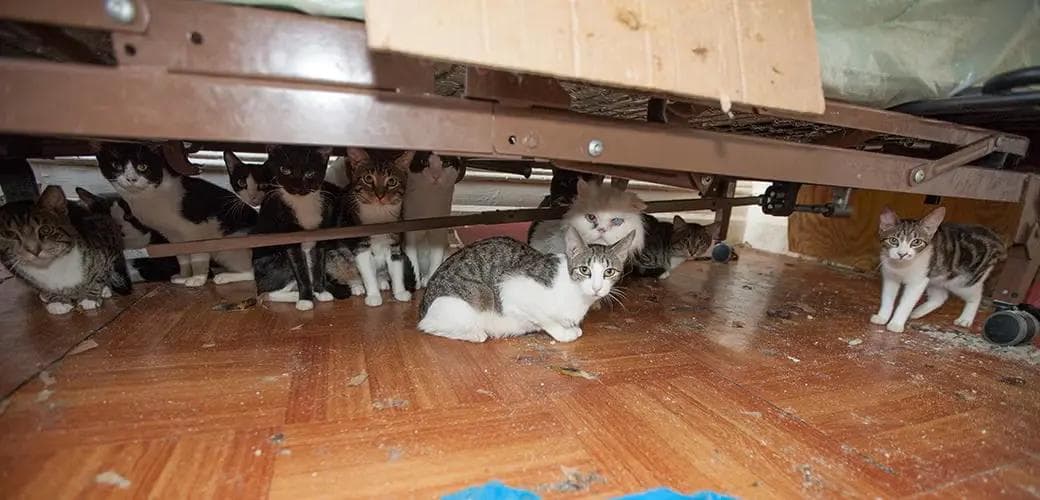
Animal hoarding is a complex issue that intertwines mental health, public health, and compassion gone awry. It occurs when an individual accumulates more animals than they can properly care for, leading to neglect, suffering, and unsafe conditions for both humans and animals. While the intentions behind hoarding often stem from empathy, the result is a cycle of misery for all involved.
Animal hoarding is a complex issue that intertwines mental health, public health, and compassion gone awry. It occurs when an individual accumulates more animals than they can properly care for, leading to neglect, suffering, and unsafe conditions for both humans and animals. While the intentions behind hoarding often stem from empathy, the result is a cycle of misery for all involved.
Globally, tens of thousands of animal hoarding cases are identified each year, though the real number is likely much higher. In the United States alone, up to 2,000 new cases are reported annually, affecting as many as 250,000 animals. Reports from Europe, Asia, and Latin America show that this is a worldwide issue, exacerbated by gaps in animal control and mental health support.
Animal hoarding is closely linked to psychological disorders such as obsessive-compulsive disorder, trauma, and social isolation. Most hoarders begin with the intent to help, but as their ability to manage the growing number of animals diminishes, denial sets in. Their homes often become overcrowded and unsanitary, sometimes harboring deceased animals. This condition reflects deep emotional distress and an inability to recognize suffering.
Animals in hoarding environments face severe neglect, starvation, and disease. Rescue organizations often encounter cases where dozens or even hundreds of animals require urgent medical attention. Beyond the immediate animal suffering, these situations pose serious public health risks due to ammonia buildup, unsanitary conditions, and zoonotic disease outbreaks. Communities must treat such cases as both welfare and safety emergencies.
Legal systems around the world struggle to address animal hoarding effectively. Many countries lack specific legislation recognizing hoarding as a distinct crime or mental health disorder. Without mental health treatment, recidivism rates remain high—over 90% in some studies. Integrated response models involving animal control, social services, and mental health professionals have proven most effective.
Non-governmental organizations play a critical role in identifying, intervening, and rehabilitating hoarding cases. Through education, early reporting, and partnerships with local authorities, NGOs can prevent crises before they occur. Community awareness and compassion-driven action are vital to breaking the cycle of suffering.
Animal hoarding reveals the fragile line between compassion and harm. True empathy means not only rescuing animals but also recognizing when help has turned into harm. By combining mental health support, strong legal frameworks, and community vigilance, society can protect both humans and animals from the devastating effects of hoarding.

Every donation goes directly to rescuing animals, providing medical care, shelter, and food. With your help, we can give them hope and a future.